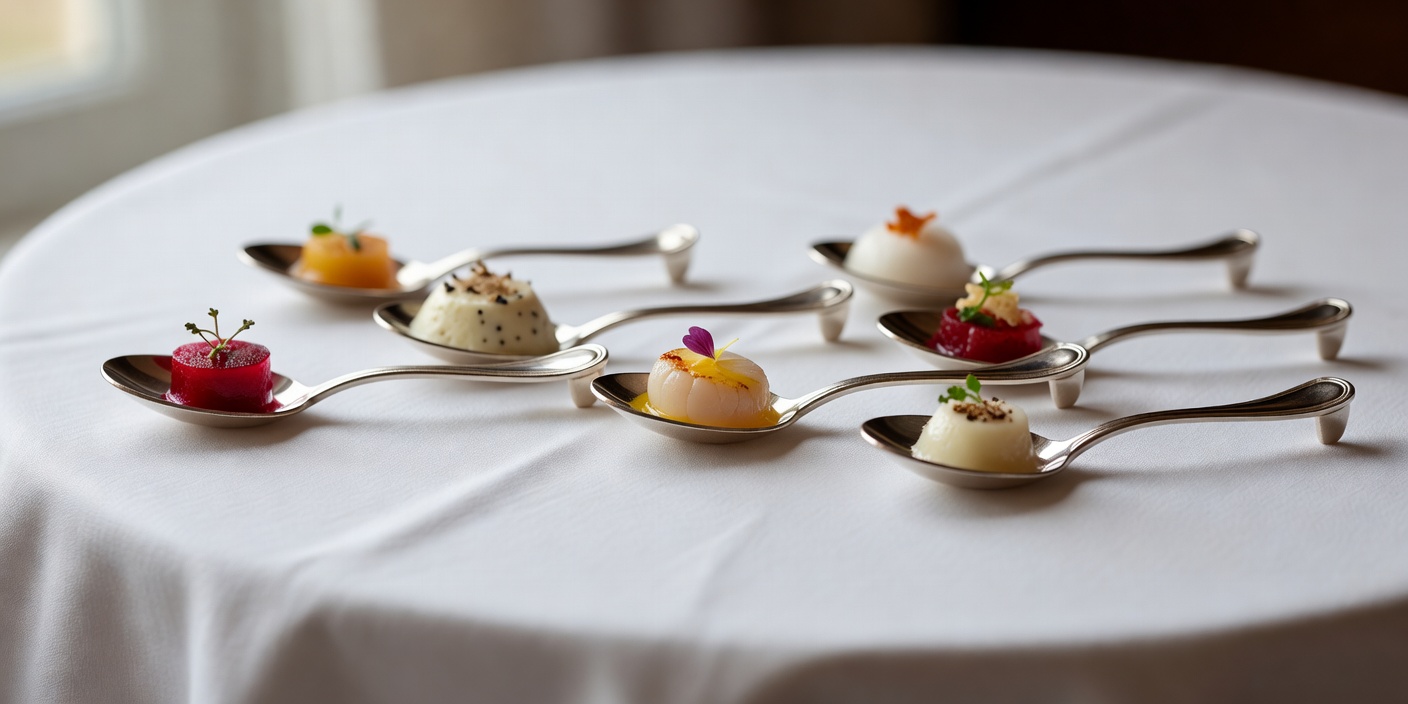
Tasting menus show the full style
A tasting menu is a fixed sequence of small courses chosen by the kitchen. It expresses a chef's style most completely and is the format many starred restaurants are best known for. It also asks the most of diners: the meal can run for several hours, the whole table is often expected to take the same menu, and changes for dietary needs usually require advance notice.
Drinks pairings — wine and, at many restaurants, non-alcoholic pairings — are commonly offered alongside. They add to the bill and pace your drinking around the kitchen's timing; ordering by the glass or bottle gives you more control over both.
Set lunches lower the commitment
Some restaurants run a shorter set menu or a reduced tasting menu at lunch or on certain weekdays. Where it exists, it can be a gentler introduction to the same kitchen, with less time at the table and usually a lower spend. Availability changes, so check whether a lunch menu runs on your chosen day and how its courses differ from the dinner menu.
À la carte and sharing plates keep choice open
Ordering from a menu suits mixed groups, lighter appetites and dietary needs that a fixed sequence cannot easily absorb. Many one-star and Bib Gourmand restaurants work this way, sometimes with sharing plates that arrive in waves rather than as formal courses. If dishes are designed to share, ask how many the kitchen suggests per person so the table neither over-orders nor goes hungry.
Counters and chef's tables put the kitchen in view
Counter seating places you facing the kitchen or bar and often suits solo diners and pairs, since conversation with the team comes naturally. Chef's tables, where offered, may be bookable only for a fixed group size and sometimes carry their own menu and deposit. Think about stool height, back support and whether a guest will be comfortable on a high seat for a long meal.
Formats compared
| Format | Typical pace | Flexibility | Often suits |
|---|---|---|---|
| Dinner tasting menu | Long, set by the kitchen | Low; changes need notice | Celebrations and curious diners with time |
| Lunch or set menu | Moderate | Low to moderate | First visits and daytime plans |
| À la carte | Set by the diner | High | Mixed groups and varied diets |
| Sharing plates | Flexible, in waves | High | Relaxed groups who like to share |
| Counter or chef's table | Often long | Varies by restaurant | Solo diners, pairs, kitchen enthusiasts |
These are tendencies; the restaurant's own menu page is the reliable source for any particular kitchen.
Choosing in four steps
- Decide how long you want to spend, including the journey home afterwards.
- Agree how adventurous the table wants to be; one reluctant diner can make a long menu feel longer for everyone.
- Check whether the whole party must take the same menu, and whether children or guests with smaller appetites can take a shorter version.
- Compare food, drinks and service across formats using the restaurant's current published menus, which change over time.